
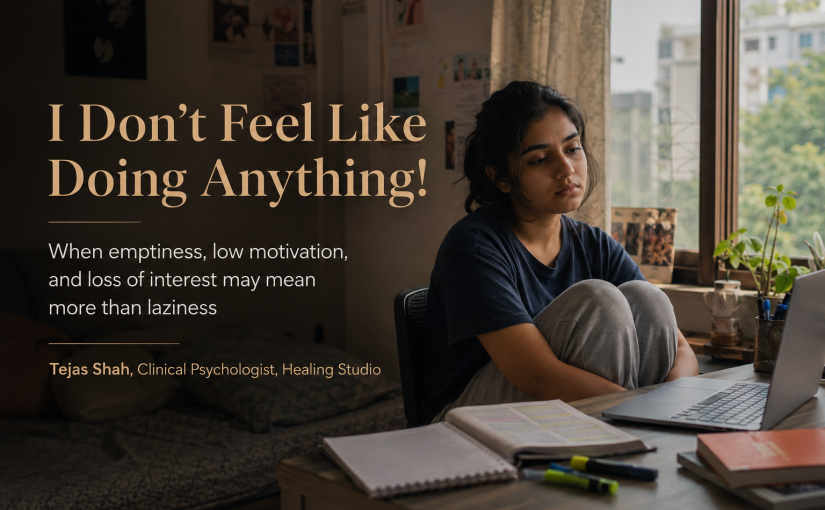
If you keep thinking, “I don’t feel like doing anything,” the problem may be more serious than tiredness, laziness, or lack of discipline. Sometimes this feeling is a quiet sign of depression, emotional shutdown, or psychological exhaustion. You may still be functioning in some basic ways, but inside, everything feels flat, heavy, and difficult to begin.
Many people describe this state in a very similar way. They do not always say, “I feel depressed.” Instead, they say: I feel empty. I have no interest in anything. Even small tasks feel like too much. I don’t know what is wrong with me. That distinction matters.
When “I don’t feel like doing anything” starts to mean more
There are periods in life when anyone may feel mentally tired. Exams, heartbreak, family tension, burnout, illness, and disappointment can all reduce energy for a while. However, when “I don’t feel like doing anything” becomes your emotional baseline, it deserves attention.
This becomes clinically important when the loss of drive is accompanied by things like:
- loss of interest in activities you once enjoyed
- difficulty starting even simple tasks
- social withdrawal
- crying spells or emotional flatness
- changes in sleep, appetite, or weight
- poor concentration
- feelings of worthlessness
- the sense that nobody cares, even when care is present
In clinical work, this issue often appears not as one dramatic collapse, but as a slow narrowing of life. The person begins avoiding college, work, friends, movement, routine, and even pleasure. Then the shrinking of life starts to deepen the very emptiness that caused it.
Why you may not feel “sad,” but still be struggling
One common misunderstanding is that depression must always feel like sadness. It does not. Sometimes depression feels more like emptiness, numbness, heaviness, or inner deadness.
A person may say:
- “I don’t feel like doing anything.”
- “I’m not exactly sad. I just feel blank.”
- “Nothing feels enjoyable anymore.”
- “I know I should care, but I don’t feel it.”
That pattern often points toward anhedonia — a reduced ability to feel pleasure in things that normally bring interest, enjoyment, or emotional reward. This can affect hobbies, exercise, friendships, studies, sex, work, family life, and even hope itself.
Anhedonia is not simply boredom. It is not ordinary procrastination either. It is more like the emotional system has gone dim.
I don’t feel like doing anything: why it affects everything
When this state continues, it does not stay limited to mood. It starts interfering with daily functioning in very practical ways.
How low motivation begins affecting daily life
You may notice that:
Studies or work become unusually hard
You sit down to study, but your mind drifts. You read the same line repeatedly. You cannot hold attention. The problem is not always lack of ability. Often, the mind is too emotionally burdened to engage properly.
Routine begins collapsing
Getting out of bed feels harder. Exercise stops. Meals become irregular. Personal care drops. The day loses shape. Once structure breaks, motivation often drops even further.
Relationships become distant
You stop replying. You avoid friends. You do not feel like talking. Then loneliness increases, and your mind may start telling you that nobody cares. That is a cruel loop.
Self-esteem starts falling
When you cannot function the way you used to, you may begin attacking yourself internally. What is wrong with me? Why am I like this? I’m useless. This is often where emotional pain turns into self-criticism.
What may be happening underneath
This is not only a motivation problem. Psychologically, it may also involve emotional depletion, self-attack, unresolved hurt, shame, loss, conflict, or depression-related withdrawal.
A useful way to understand this is that the problem is not only the symptom you see on the surface. It is also the pattern underneath that keeps recreating it. Someone may feel low, withdraw, stop doing meaningful things, feel more cut off, then become even more hopeless and self-critical. Over time, the person starts believing the problem is their character, when it is actually a painful psychological state.
Drawing from my work as a Clinical Psychologist, I often find that people describe the surface issue clearly — “I don’t feel like doing anything” — but need help recognizing the deeper emotional position they have been living from. Sometimes it involves disappointment, anger turned inward, chronic pressure, feeling unseen, or an internal belief that nothing will really help anyway.
“When interest in life begins to fade, the person is not becoming lazy. Very often, they are becoming psychologically burdened.” — Tejas Shah
Why self-blame makes it worse
When people feel unmotivated for long enough, they usually start explaining it in harsh moral language. They call themselves lazy, weak, useless, spoiled, ungrateful, or irresponsible. That usually makes the problem worse, not better.
Self-blame adds shame to exhaustion. It turns an emotional struggle into a character verdict.
In therapy, this distinction matters a great deal. A person who feels emotionally shut down usually does not improve by being scolded — whether by family, productivity advice, or their own inner critic. They often need careful understanding of what has collapsed internally and why.
When the feeling includes emptiness, crying, and worthlessness
If “I don’t feel like doing anything” is also accompanied by feeling empty, crying for no clear reason, gaining or losing weight, withdrawing from people, and feeling unloved or worthless, it becomes even more important not to brush it aside.
These signs may suggest depression or a related emotional difficulty that needs proper assessment. This article is educational in nature and cannot replace therapy, diagnosis, or an individualized clinical assessment.
What often worries people is that they cannot fully explain why they feel this way. But emotional suffering does not always arrive with a clear story attached. Sometimes the mind is carrying more than it can process, and the first visible signs are loss of pleasure, loss of motivation, and inner emptiness.
What not to do when you feel like doing nothing
When you feel this way, a few common responses tend to backfire:
1. Waiting too long for it to “just pass”
A few bad days are one thing. A few weeks of emptiness, withdrawal, and collapse in functioning are another.
2. Forcing yourself with harshness alone
Some structure can help, but internal bullying usually deepens shame.
3. Isolating completely
Withdrawal often feels easier in the short term, but it usually worsens the emotional fog.
4. Comparing yourself with how you “should” be
This often turns distress into humiliation.
What may actually help
If you have been saying, “I don’t feel like doing anything,” start by treating that as meaningful information, not a personality flaw.
A few first steps may help:
- tell one trusted person what has been happening
- notice how long this has been going on
- look at whether your studies, work, sleep, appetite, and social life have changed
- reduce self-attack where possible
- seek a proper psychological consultation if the pattern is persisting
Therapy may help by understanding whether this is depression, emotional exhaustion, unresolved conflict, grief, self-esteem collapse, or a more complex underlying pattern. Good therapy does not just tell you to “stay positive.” It helps clarify what is happening, what is maintaining it, and how to respond differently.
When to seek professional help
You should consider reaching out to a clinical psychologist or other qualified mental health professional when:
- the feeling has lasted more than a couple of weeks
- your studies or work are being affected
- you are withdrawing from people and routine
- you no longer enjoy things that once mattered to you
- you feel persistently worthless, empty, or hopeless
- you find yourself crying often or feeling emotionally numb
- life is beginning to feel pointless
If thoughts of self-harm, suicide, or not wanting to live are present, seek urgent help immediately through local emergency services, a mental health professional, or a crisis helpline.
A more accurate way to think about this
Sometimes the real question is not, “Why am I so lazy?”
It is, “What has happened inside me that life now feels so hard to enter?”
That question is kinder, but it is also more clinically accurate.
“Low motivation is often the visible surface of a deeper emotional struggle, not the whole problem.” — Tejas Shah
How therapy may help when you don’t feel like doing anything
Therapy can help in several ways:
- clarify whether you are dealing with depression, emotional numbness, burnout, or something more layered
- reduce shame and self-blame
- understand what has gone missing internally — pleasure, hope, emotional connection, self-worth, energy, or meaning
- identify patterns that are maintaining the shutdown
- gradually help restore functioning, feeling, and direction
An article can help you recognize the pattern. Therapy can help you work with it more deeply.
If this speaks to what you are going through, you may consider reaching out for a consultation to understand what kind of support may be useful.
FAQs
1. Is it normal to think “I don’t feel like doing anything” for days?
It can happen during stress, disappointment, or exhaustion. However, if it continues for weeks, affects daily functioning, and comes with emptiness, withdrawal, crying, or loss of interest, it may need professional attention.
2. Does “I don’t feel like doing anything” always mean depression?
Not always. It can also appear in burnout, grief, emotional exhaustion, shame, or unresolved stress. But it is a meaningful sign and should not be ignored if it persists.
3. What is the difference between laziness and anhedonia?
Laziness is often used as a moral label. Anhedonia refers to difficulty feeling pleasure or interest in normally enjoyable activities. It is usually linked to emotional or depressive states, not simple unwillingness.
4. Can therapy help if I don’t even feel motivated to start?
Yes. Many people begin therapy precisely because they cannot generate motivation on their own anymore. Therapy does not require you to arrive fully energized. It helps make sense of what has shut down and what may help you begin again.
When low mood, emptiness, and loss of motivation start affecting daily life
If you have been feeling emotionally flat, withdrawn, unable to focus, or unable to enjoy anything properly, individual therapy may help you understand what is happening beneath the surface and how to begin responding differently.
Tejas Shah is a Clinical Psychologist and Couples and Family Therapist at Healing Studio.
He works with adults, couples, and families facing depression, anxiety, emotional exhaustion, self-doubt, relational pain, and repeated inner or interpersonal patterns. His approach aims not only at symptom relief, but also at deeper clarity, emotional understanding, and more workable change in daily life.